
Is Sen. Bill Cassidy really a dead man walking?
After Trump's endorsement of Julia Letlow, it might be too early to declare his candidacy toast, but not too early to say that his bread is buttered.

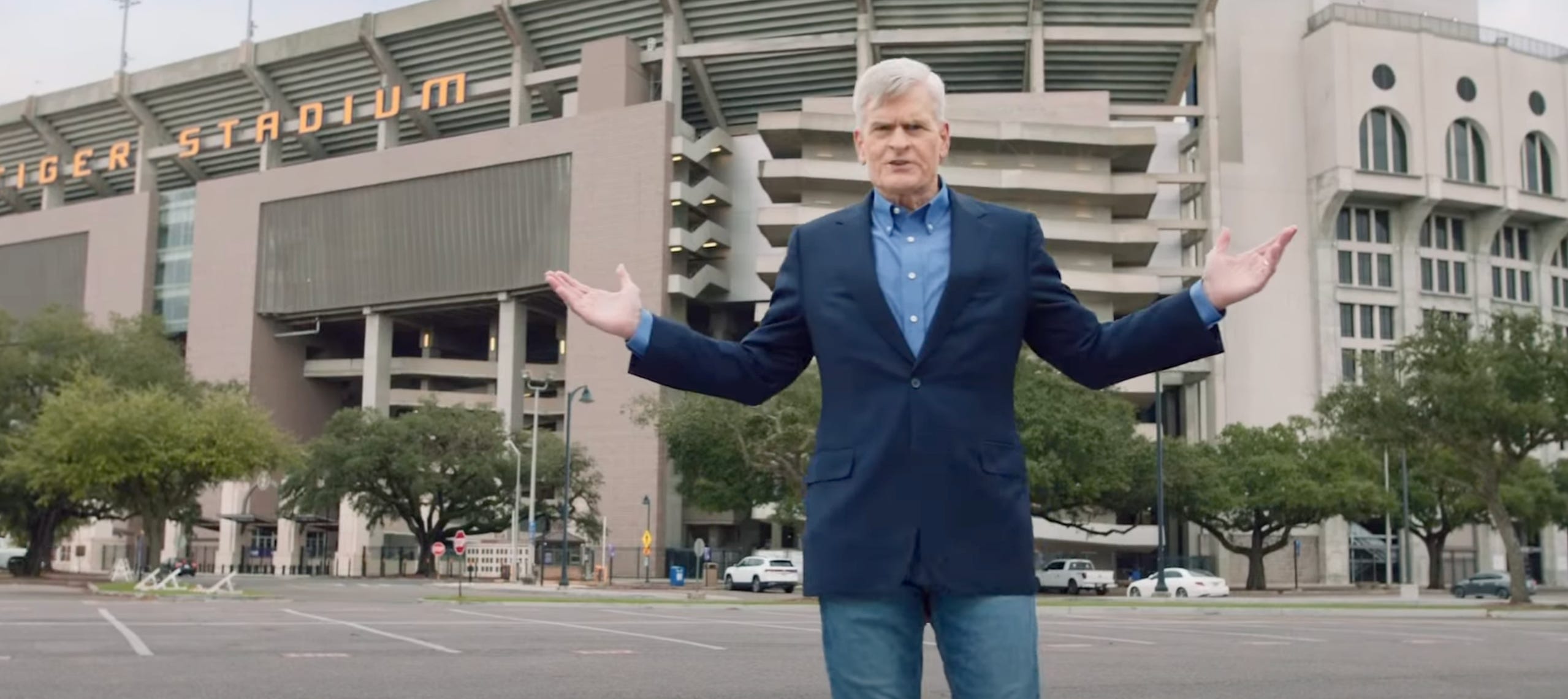
As the broad contours of Louisiana’s U.S. Senate race come into focus, the central question is this: Can incumbent Bill Cassidy win a third term after President Donald Trump abandoned him for U.S. Rep. Julia Letlow?
By now, everyone remembers Cassidy’s January 2021 vote to convict Trump during his second impeachment, followed by his awkward efforts to claw his way back into Trump’s good graces.
None of it worked—not even his embarrassing support for Trump’s disastrous Health and Human Services nominee, Robert F. Kennedy Jr.
To Trump, the impeachment vote was unforgivable. No amount of groveling could erase the stain. (It may not have helped that Cassidy refused to endorse Trump in 2024.)
That likely helps explain why Trump endorsed Letlow.
It didn’t hurt that the bucket of crabs that is the Louisiana GOP couldn’t coalesce around any single alternative to Cassidy. The only thing Gov. Jeff Landry and other prominent Republicans seemed to agree on was that they didn’t want the incumbent.
So, Trump stepped in and endorsed Letlow.
And here we are. The incumbent Republican senator is running in a May GOP primary against Letlow, state Treasurer John Fleming, state Sen. Blake Miguez, and a few other potential challengers.
Qualifying is just weeks away, and it’s still unclear how many of these Republicans will pay the fee and enter the race.
Plenty remains uncertain, including:
Will Cassidy go the distance?
If so, what’s his case for reelection in the face of Trump’s rejection?
Will he attack Letlow or try to take the high road?
Will Landry endorse Letlow?
What will Sen. John Kennedy do?
How aggressive will the attacks on Cassidy become?
Will Trump record a spot for Letlow and, if so, how vicious will his attack on Cassidy be?
How many GOP candidates will qualify?
Will Trump push the others to drop out and clear the field for Letlow?
Will Cassidy debate his opponents?
How appealing a candidate is Letlow, and does Cassidy have any opening to exploit?
And what about the Democrats? Will they field a serious contender?
Let’s take a stab at a few of those. I’d love to read your thoughts in the comments.
For now, Cassidy’s staying in.
He just launched a $500,000 statewide ad campaign with a spot touting an anti-fentanyl bill Trump signed. Wisely, Cassidy seems to be putting off the final decision about staying in the race until he sees whether this and other spots move the needle. There’s no need to rush.
In a few weeks—likely just before qualifying—I’m sure he’ll run a poll, reassess, and decide whether to go all in or bow out gracefully.
If he stays, what’s his plan?
He’s reportedly hoping to pull support from independents and conservative Democrats, essentially counting on non-Republicans to cross over and vote in the GOP primary. He seems to expect more support from “no-party” voters, but is also banking on the idea that some registered Democrats, who haven’t voted blue in years, might switch parties to back him in May.
This mirrors the third-party strategy some floated last year: that Cassidy should position himself as a centrist and seek support from moderates across party lines as an independent candidate. That’s no longer a viable option, as the deadline for getting on the fall ballot as a third-party candidate has expired.
But Cassidy’s plan to appeal to moderates and independents always rested on at least two conditions:
1. That Cassidy wouldn’t move rightward, but a bit to the middle to appeal to moderates.
2. That no credible moderate would enter the GOP primary who might outflank him from the center.
That already-shaky strategy of appealing to moderates to save him may have fallen apart when Letlow entered the race.
She’s young, appealing, and far less MAGA than Miguez or Fleming—and arguably less so than Cassidy himself. While she’s certainly a Trump supporter (he endorsed her, after all), her demeanor and voting record don’t scream MAGA cultist.
According to Heritage Action, her conservative scorecard has ranged from the mid-60s to the high-80s. That’s clearly conservative Republican, but not rabidly so. Her tone, discipline, and focus on education policy could appeal to suburban moderates, many of whom Cassidy was counting on.
Letlow might even come across as more moderate than Cassidy on some key issues. She won’t need to answer for Cassidy’s vote to confirm RFK Jr. or his various flip-flops. Her image is cleaner, fresher, and less burdened by the Trump-era baggage Cassidy still drags behind him.
In other words, she can position herself a bit to the left of Cassidy (great for the general election), all while enjoying Donald Trump’s enthusiastic support in the primary. Talk about a potential win-win situation.
And this is all before the attack ads on Cassidy begin.
We don’t yet know how hard Letlow or others will hit Cassidy over the impeachment vote, but expect it to come soon. And it will probably come from Trump-aligned PACs and rival campaigns. These attacks may not tell voters anything new, but they’ll still inflict damage.
Eventually, we’ll need to assess what Trump’s endorsement of Letlow really means.
Did Cassidy already lose the hardcore MAGA voters long ago? Were Louisiana Republicans waiting for Trump’s blessing before choosing sides? Or will Trump’s endorsement not change minds so much as it helps Letlow clear the field?
It might be the latter. Trump may have persuaded no one to leave Cassidy, but he may help consolidate support behind Letlow. Miguez and Fleming both have a few million in the bank, so it may be difficult to push them out of the race, but I’d expect the White House to try.
Meanwhile, Cassidy’s not without assets. He’s sitting on at least $12 million, and probably has millions more in superPAC money to count on. He has ample statewide name recognition. He has the backing of Senate Majority Leader John Thune and the NRSC, which is likely to set aside funds to defend him. He can bring prominent Senate colleagues here to vouch for him.
And he’ll surely remind voters that replacing him with Letlow would cost Louisiana a HELP Committee chair and seniority in the Senate. It’s a valid argument: why trade influence for inexperience?
Speaking of Senate colleagues, the Trump endorsement puts Louisiana’s other Republican senator, John N. Kennedy, on the spot. It’ll be hard for him to go against a colleague and friend like Cassidy.
But it might be even harder to go against Trump and his long memory and reputation for exacting revenge. Kennedy might try to split the baby by not endorsing at all. But then, silence in a race like this would be a tacit endorsement of Letlow.
Landry doesn’t seem on good terms with any of the candidates, save for Letlow, whom he’s apparently been urging Trump to endorse for months. I’d expect him to back her.
Will Cassidy debate Letlow and the others? He won’t want to. Standing on a stage surrounded by MAGA allies attacking him for voting to convict Trump doesn’t sound appealing. But avoiding a debate entirely? That will be a hard sell.
Then, there’s the Democratic Party wildcard.
So far, no big name has entered the race. Rumors swirl that former New Orleans Mayor and Biden advisor Mitch Landrieu has a poll in the field.
But I’d bet no serious Democrat enters. The electoral math is brutal. Trump won Louisiana by 22 points in 2024. Even if his support has softened since then, the state remains deep, deep red, especially in national and congressional races.
If Landrieu (or someone like him) did jump in, it might be because he believes someone more radical and polarizing like Miguez could win the GOP nomination, giving him a narrow shot in November. But against Letlow or Cassidy, that’s a stretch.
If Landrieu’s polling shows Louisiana in play, that means Democrats see a national blue wave forming, big enough to put Senate races in Texas, Florida, Iowa, and Ohio on the table. That scenario seems optimistic, but I guess it’s always possible. (One can dream!)
Two years ago, Landry and the legislature rewrote the state’s election law to restore party primaries for congressional races. That system hadn’t been the long-term norm in Louisiana since the late ’70s. Some observers believe the change may have been designed, at least in part, to make Cassidy’s path more difficult. (So much for Cassidy's endorsement of Landry in the governor’s race.)
Landry and his allies likely figured Cassidy couldn’t survive a closed Republican primary dominated by a fervent MAGA base. And here we are watching that prediction unfold.
Cassidy isn’t toast, but his reasons for optimism are in short supply.
If I had to bet, I’d say Cassidy doesn’t lose his primary, not because he wins it, but because he drops out. Maybe before qualifying.
I write that as someone Jeff Landry once tried to fire. And I can tell you from experience: it’s usually better to leave a job you love on your own terms than to have it taken from you.
Cassidy might be wise to do the same.
I can attest to the reality of the rumored Landrieu poll. I answered one four days ago.
And, as having a serious Dem in the discussion, the LA Dem Party needs a wholesale housecleaning from top to bottom, starting at the drawing board.
They are going to have to fully go into communities to rebuild a brand that shows they are a party for all genders, all races, all workers, all students, and they really need a shot of youth within the party.
They need to go into communities of the white enclaves and say hey: “do you really like what is going on?”
The top of the party needs to listen, not just hear, what the people on the ground have to say.
I believe there is an actual thirst in states within the Deep South for a group that truly stands for the rights of all no matter of race, color, creed, income, religion, gender identity. And they have to make sure they are inclusive at the same level for all and not be hijacked.
There will never be a 100% acceptance of a candidate or political party but hopefully it can help the pain of those in need.